How do people plan a trip in 2026?
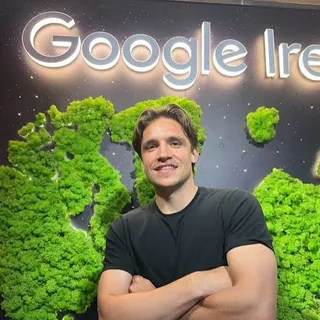
Kamil Tavas, Agency Lead at Google, brought the data: third-party surveys commissioned by Google and Google's own search data, global (including the Netherlands and the UK), with sources on every slide. He started with a live example — asking Google's AI Mode what to do in Amsterdam with a one-year-old — and got a colour-coded, kid-friendly itinerary with the Science Museum at the top. That, he said, is how Google is changing for travellers.
Three types of information fuel every decision (Google/Lynx, Consumer Pathways, US, 2025):
| Type | What it does | Where it peaks |
|---|---|---|
| Facts | Identify, evaluate and narrow down options — destinations, availability, rates, things to do | Throughout; 81% of consumers check facts before booking |
| Trends | Inspiration — "what's in?", "what is everyone doing?" | Early: dreaming and feasibility |
| Validation | Confidence from others — reviews, ratings, people in similar situations, experts | Late: right before and after booking |
The surprise is the end of the journey: validation jumps just before booking. People change their minds in the last minutes based on reviews and ratings. For media planning that means inspiration can run always-on but lighter towards the end, while validation-style, call-to-action messaging should grow in the second half of the funnel.
Free access
Get the full article (and the other five talks)
Free, straight to your screen. One short form unlocks every article on this device — and we email you a link for anywhere else.
What is the experiential travel economy?
Tours, activities and attractions have become the primary driver of leisure demand — a market worth $1.1–1.3 trillion in 2024, a quarter of it paid, ticketed experiences. 60% of travellers select a destination based on the quality of local activities, and 54% of discretionary leisure budgets go to experience-first events. Gen Z is the most likely to travel for a specific event.
Search confirms the shift: while flights and hotels plateau, interest in tourist attractions, theme parks and experiences keeps growing. Queries like "special things to do in NYC" (+135%), "horseback riding tours Las Vegas" (+375%) or a Broadway star's name (+286%) show that people don't travel to a city for the city — they travel for what they can do there (Google internal data, Dec 2024 vs Dec 2023).
Why does Google still matter when people use AI?
Because they use both. 95% of surveyed travellers who use an LLM also use Google and/or YouTube, and 86% of Facebook/Instagram users in the purchase journey also use Google Search. Together Google and YouTube are the most trusted platforms for travel information, and 77% of travellers use them in the late, validation stage.
The other reality: three in five travellers are undecided, they research with increasingly sophisticated queries, and the average research window is 45 days. Travel queries of eight words or more grew 19% year on year (Google internal data, Oct 2025 vs Oct 2024). People are not searching — they are asking, as if talking to an agent.
What is Google AI Search doing for travel?
- AI Overviews: the contextual answer at the top of results, used by 2 billion people, driving higher-quality clicks; users search more often and report being happier with results (Alphabet earnings Q2 2025).
- AI Mode: the conversational part of Search, live in 200 countries with 75 million daily users who ask questions two to three times longer than a traditional search (Alphabet earnings Q3 2025, Google internal data).
Users say they decide faster (77%) and more confidently (75%). Google's direction is effortless research (editorial, magazine-like results with maps and price graphs), deep personalisation (including loyalty points), and agentic actions — booking a room directly from the conversation with the partner of the user's choice. For attractions the relevant point is simple: the richer and more structured your product data, the more Google can show when someone asks a detailed question.
Which new ad formats can attractions use?
"The best ads are answers." Google is expanding the travel ads suite beyond hotels to flights, events, car rentals, vacation rentals and things to do, with one unified campaign experience. Launched in April 2026:
- Travel feeds in Search ads — enrich search campaigns with your product feed so the ad shows more of what you offer.
- Travel Promotion Ads — image-led, mid-funnel placements that surface your offer while the user is still exploring.
- Booking links — let people book from Google; the transaction still happens on your site.
All three run on the Things to Do Center: upload adult, child and family tickets, skip-the-line options, audio guides, combi deals — every variant is a product. Detailed descriptions and targeted messaging mean the ad answers the specific question being asked, which converts better.
Ads inside AI Overviews and AI Mode are not yet available in EMEA; today ads run above or below the overview. That should not stop you: feeds and structured data already help your organic presence in these experiences, and you'll be ready when the placements open.
How do you activate it?
- Upload your feeds to the Things to Do Center.
- Link your first-party data to Google Ads — "first-party data is gold" — and use Customer Match.
- Opt into AI Max for Search or Performance Max so the system finds the right audience with the right product data. Google reports 27% more conversions at similar CPA/ROAS for AI Max versus campaigns that mostly use exact and phrase-match keywords (Google internal data, 2025).
- Add video: it is an essential part of the multi-channel mix.
Plan across the whole journey — inspiration, facts, validation — and match the message to the moment.
Questions the room asked
What is the Things to Do Center?
Google's feed hub for attractions and activities. You upload your products — adult, child and family tickets, skip-the-line, audio guide, combi tickets — with descriptions and images. The feed powers Travel feeds in Search ads, Travel Promotion Ads and Booking links, and improves your organic presence in Google's travel and AI experiences.
Can I already advertise inside AI Overviews or AI Mode?
Not in EMEA at the time of the talk. Ads appear above or below AI Overviews. Preparing your website, feeds and first-party data now means you can switch on the new placements when they launch.
How much budget do I need for travel ads?
There is no minimum figure; it depends on how many people you want to reach and where. AI Max needs a certain volume of conversions to activate. As a rough planning rule from the talk: a form fill converts around 10%, a ticket transaction around 1–3%.

About the speaker
Kamil Tavas is Agency Lead in Google's Netherlands team, working with agencies and their travel and leisure clients on Google's advertising and AI products.
Want to talk about this for your park, museum or destination?
Red Online Marketing works with attractions, zoos, museums, holiday parks and destinations across Europe on exactly these questions. Read more: Google Ads & YouTube at Red. Or email events@redonlinemarketing.com / get in touch via redonlinemarketing.com.