Where is AI in marketing heading — and what does it mean for agencies?
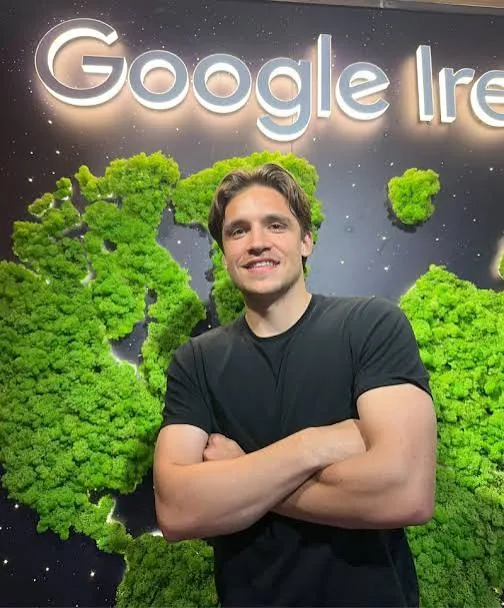
Elias Malm, co-founder and CEO of EpiMinds and a former Google marketing leader, opened the afternoon with a look at what is already running in production. EpiMinds has spent the last twelve months building multi-agent systems for marketing teams: $6.6M raised from Lightspeed Venture Partners, 1,000+ brands onboarded and more than $1.4 billion in ad spend managed by agents. His talk had three parts — building agents that manage that spend, what happens when AI builds and trains itself, and predictions for the next twelve months. His message for the leisure industry was blunt: this is not a roadmap, it is happening now, and the question is how you position yourself.
Free access
Get the full article (and the other five talks)
Free, straight to your screen. One short form unlocks every article on this device — and we email you a link for anywhere else.
Why one AI assistant is not enough
Two problems kept coming back when EpiMinds started. First, a single assistant breaks down when you hand it three years of marketing data from seven channels. Second, why would you offload work to an agent that is not as good at marketing as you are?
The answer was a multi-agent system: instead of one agent, hundreds of specialised agents that work together dynamically and are connected to the whole marketing stack — ad platforms, BigQuery, the CRM. Ask it to "audit our campaign structure" and a search agent, budget agent, analysis agent, creative agent, strategy agent and trends agent pick up their part of the job. Each agent is trained deeply on one area, so its output is good. And because dozens of agents observe the one that is working, hallucinations are caught before they reach a campaign. The loop is always the same: analyse → plan → execute.
What are agents already doing today?
Malm's live demo showed three stages of maturity.
| Stage | What the agents do | Example from the talk |
|---|---|---|
| Analyse | Fetch data from all platforms in real time and answer business questions | "Give me a cross-channel, cross-market analysis of the last 30 days" — including unit economics, not just platform metrics |
| Plan & execute | Build campaign structures, write copy, create creatives, launch after approval | A full Google Search structure (branded, semi-branded, generic) for a UK launch, proposed with budgets and copy |
| Self-build | Find and install the tooling they need | Agents downloaded Google's open-source Meridian marketing-mix model, hosted it and produced an 18-page Meridian-style MMM report — saturation curves, marginal ROAS, seasonality — in 27 minutes; work the client had spent two months on |
The analysis stage gets interesting when outside signals come in: weather, local news, travel trends. Malm noted that Red Online Marketing does this well for its leisure clients, and it is exactly the kind of context an agent can pull in automatically.
What happens when agents run autonomously?
The newest phase gives agents four extra capabilities: memory (what happened before), the ability to wake up on their own, self-scheduling (planning their next run) and rules set by the agency. Then EpiMinds let them run.
To understand how such an agent thinks, it was given a private diary. In run 34 (18 March 2026) it wrote that Search Console showed searches for "lucy ai marketing" — its own name — 107% above baseline: "That's me. People are searching for me specifically, or at least for what I represent." It connected that to a 53.9% month-on-month decline in the EpiMinds brand query over 17 consecutive runs and formed a hypothesis: the brand is shifting to "the Lucy company", so the decline might be a transition rather than bad news — "a hypothesis I haven't put in a briefing yet because I don't have enough data to support it confidently." Three days later, with more data, it surfaced the insight as a briefing nobody had asked for.
The agent's calendar now fills itself: CPC checks, campaign launches, four-week plans for a client's Dutch sale. Crucially, the agency stays in charge: it trains the systems, sets the rules for what agents may and may not do, and approves proposed actions. The final step is self-improvement — agents state a hypothesis ("this creative will perform better"), schedule a follow-up, check the result and learn from it. In one AI-native client account, hundreds of such learnings have accumulated, from lead-gen account structure to conversion set-up.
Three predictions for the next twelve months
- LLMs become a commodity. Token prices are falling and models from Google and others are good enough for most tasks. Treat them like electricity and build your company on top of them.
- Talent consolidates. As in software, one exceptional marketer with AI can have outsized impact. The new role in agencies and in-house teams is engineer + exceptional marketer — someone who directs hundreds of agents. For strong marketers, "the next two to three years will be the best of your career".
- Don't compete with AI — get out of the loop. Malm disagrees with the line "you won't lose your job to AI, but to someone who uses AI". A fully automated process beats one with two manual approvals every time. Oversee and train the systems; don't be the bottleneck in repetitive work.
What should you invest in?
Technology gets cheaper and better fast — the cost per gigabyte of storage followed the same curve. So invest in things that get exponentially better as the underlying models improve. Malm's test: if the next-generation model ("Astra 10") releases tomorrow, or today's models get twice as good in six months — which will happen — what people, skills and tech should I have?
- People and partners in the top 1% of a specific niche. Malm's advice to agencies: specialise.
- Skills that agents are still bad at, as EpiMinds' European benchmarking shows: creativity, taste, user-generated content, brand, measurement, and people.
- Tech that is dynamic and AI-first, not dependent on a single provider, and built on proprietary data that is self-learning: every action followed up and measured, building a "digital brain" that powers your assistants.
Then ask what becomes possible that isn't possible today: websites generated per query, one-to-one video at near-zero production cost. Have that roadmap in your head and work towards it.
Questions the room asked
What is a multi-agent marketing system?
Instead of one assistant you chat with, a multi-agent system uses many specialised agents — for analytics, copy, campaign structure, coding, research — that hand tasks to each other and check each other's output. It reduces hallucinations and lets the system handle work no single agent could.
Will AI agents replace marketers?
Elias Malm's view: not the exceptional ones. Repetitive execution will move to agents; the valuable roles combine marketing judgement with the ability to build and train agent systems. Creative, taste and brand work remain human strengths.
What should an attraction or destination invest in now?
Things that improve as models improve: a specialised partner ecosystem, people who can direct AI systems, dynamic AI-first tooling that isn't tied to one provider, and proprietary first-party data that the systems can learn from.
About the speaker
Elias Malm is co-founder and CEO of EpiMinds (epiminds.com), whose multi-agent marketing platform has onboarded 1,000+ brands and manages more than $1.4 billion in ad spend, backed by $6.6M from Lightspeed Venture Partners. He previously worked in marketing leadership at Google.
Want to talk about this for your park, museum or destination?
Red Online Marketing works with attractions, zoos, museums, holiday parks and destinations across Europe on exactly these questions. Or email events@redonlinemarketing.com / get in touch via redonlinemarketing.com.